The lab testing was conducted by Beaconpoint Labs, a trusted laboratory, to analyze these products for purity and safety.
The tests included:
✔ Heavy Metals
✔ Residual Solvents
✔ Microbial Contaminants
This initial project is being crowdfunded through GoFundMe here, and we greatly appreciate all the donations so far! In the near future, we plan to offer crowdfunding directly on our website using a built-in feature, making it easier for the community to fund independent lab tests without relying on third-party platforms. Please bookmark this post on reddit to stay updated on the lab testing.
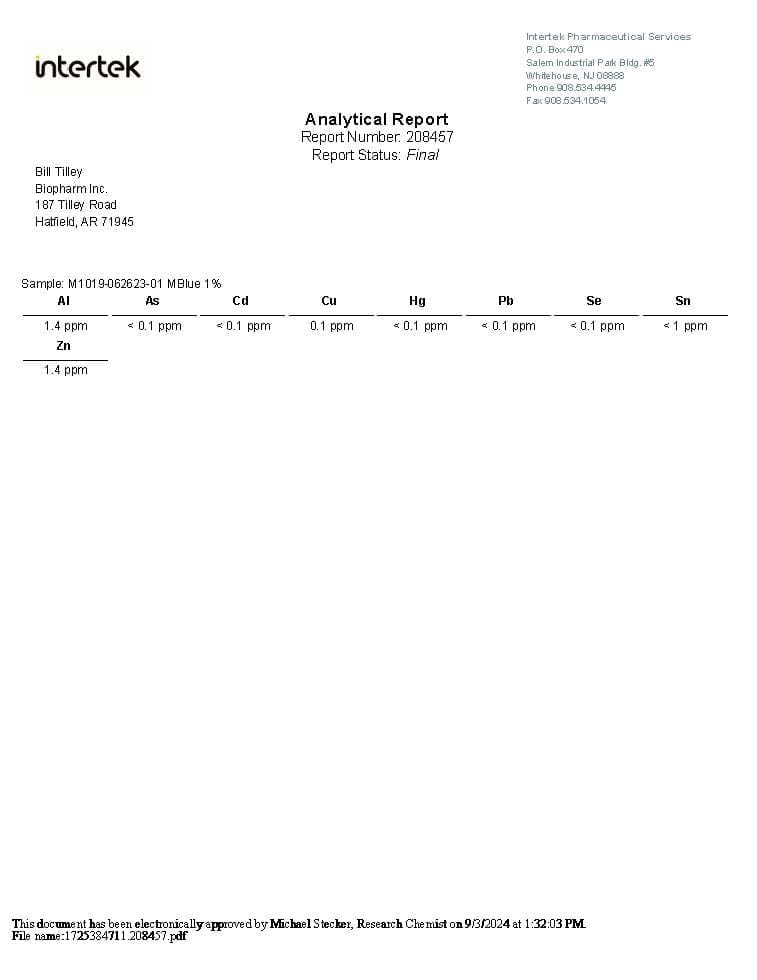
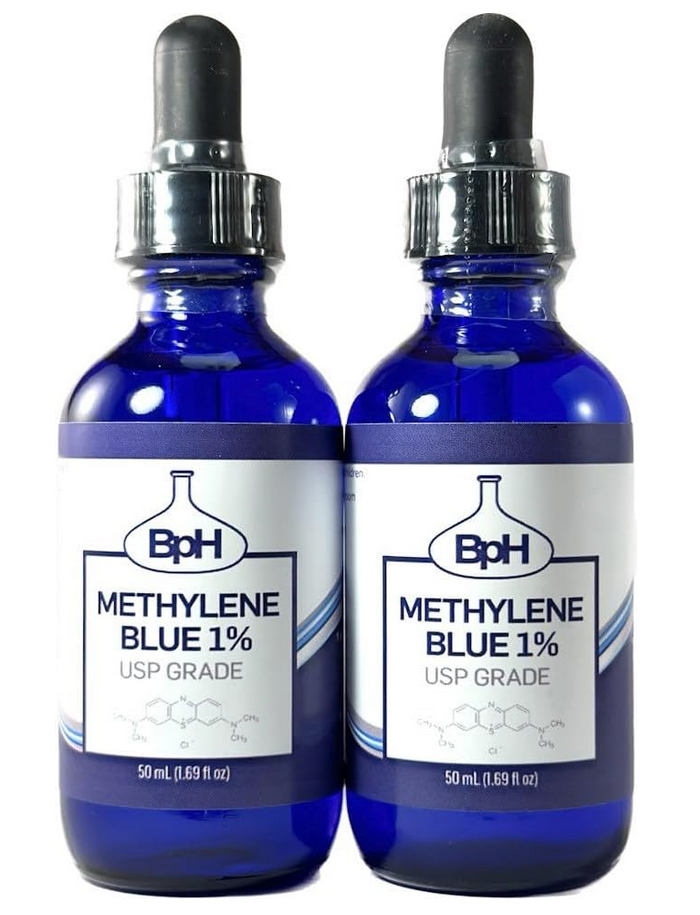
Four Biopharm Methylene Blue products were purchased from Amazon here and shipped to the lab for testing. I included their lab report (below) which was on the product page when purchased.
Lab Test Results
A Few Notes on the Results
Biopharm describes their product as “USP-grade” methylene blue on their website and marketing materials. Below are a few notes on the third-party lab results for Biopharm’s 1% USP-grade Methylene Blue (lot #SD0825A). If you spot anything I missed or think something needs correcting, feel free to leave a comment here or on Reddit — I’ll make updates as needed.
Here are a few standout results from the third-party lab analysis:
- Mold Count: 300 CFU/mL
- Mercury: 96.9 ppb
- Cadmium: 45.7 ppb
- Methylene Blue Concentration: 0.82%
→ Product is labeled as 1% USP grade. - Bacterial Count (APC): 100 CFU/mL
- No residual solvents were detected, and yeast levels were under the USP threshold. Salmonella was not detected.
Their Lab Report Versus Beacononpoint Lab Results
The lab report shared on Biopharm’s sales page appears to correspond to the product being sold, but there are significant differences between those results and the independent testing conducted by BeaconPoint Labs.
For transparency and quality assurance, thorough testing should be performed on each batch of the finished product, not just the raw materials. Lab reports should clearly reference the lot number of the specific product being tested, so that results can be directly matched to what the customer receives.
Official USP Standards & Verification
USP stands for the United States Pharmacopeia — an independent, scientific nonprofit that sets quality, purity, strength, and safety standards for medicines, dietary supplements, and food ingredients.
USP Verified is a rigorous certification program. It includes:
- Independent ingredient testing to confirm purity, strength, and quality
- Audits of the manufacturing facility
- Contaminant testing, including microbial counts, heavy metals, etc.
- Random off-the-shelf testing for ongoing quality control
Only products that pass this full process can display the USP Verified Mark — a gold badge you may have seen on some supplements. You can look up USP-verified products here.
USP Standards for Oral Liquid Supplements
Given that, I looked into the USP standards for microbial limits in oral liquid supplements. According to USP <1111>:
- Total aerobic microbial count (TAMC) should not exceed 100 CFU/mL
- Yeasts and molds (TYMC) should be ≤10 CFU/mL
- E. coli and other pathogens must be absent in 1 mL
You can read more about USP microbial limits here: https://microbe-investigations.com/usp-1111/.
This post shares lab results and public information for transparency. If you have questions about product quality or compliance, it may be helpful to contact the company directly and ask how they verify their USP and pharma-grade claims.
Lab Results & Documentation Posted by the Company, Corresponding to the Products Purchased